第16章:例外ケース(失敗の道)😵💫🧯
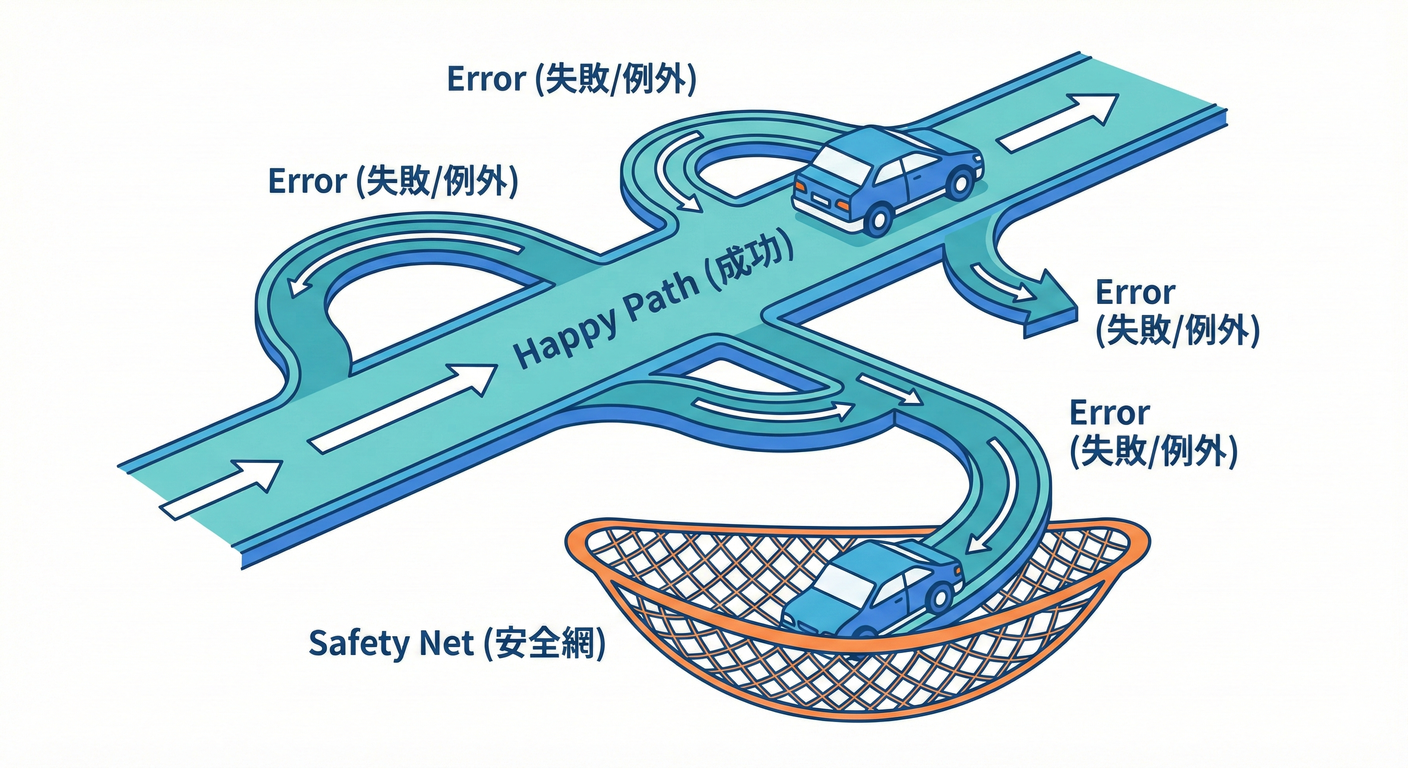
この章のゴール🎯✨
- 「失敗パターン」を仕様として言語化できる🗣️📝
- 失敗を **ドメインのルール(不変条件・状態遷移)**に落とし込める🔒🚦
- TypeScriptで “扱いやすいエラー表現” を作れる(実装とテストまで)🧡🧪
1) なんで“失敗”を先にやるの?🧠💥
成功ルートだけで作ると、リリース後にこうなる率が高いです👇😇
- 「二重確定できちゃった…」
- 「支払い前に提供できちゃった…」
- 「キャンセル済みなのに明細追加できた…」
- 「エラーの出し方がバラバラでUIが地獄…」
DDDでは、こういう“事故”を ドメインが自衛して防ぐのが大事です🛡️✨ (アプリ層は“手順”、ドメイン層は“守るべきルール”担当ね👮♀️)
2) 例題:カフェ注文☕🧾の「失敗ルート」出してみよう🗒️⚡
まずは正常ルートを1行で固定👇
- 注文作成 → 明細追加 → 確定 → 支払い → 提供 ✅
次に「失敗ルート」を“わざと”増やします😈 ここでは、よくあるのをカテゴリ別にまとめるね👇
A. 入力ミス系(UIでも止めるけど、最後はドメインで止める)🧱🧯
- 数量が0 / マイナス
- 同じ商品を追加しすぎ(上限)
- 存在しないメニューID
- 合計金額が上限超え(上限が仕様にあるなら)
B. 業務ルール違反(ドメインの主戦場)🔒🚫
- 確定済みの注文に明細追加
- 支払い前に提供
- 支払い後にキャンセル
- 確定を二回呼ぶ(二重確定)
- キャンセル済みを支払う
C. 状態遷移ミス(いちばん壊れやすいゾーン)🚦💣
- Draft → Paid(飛び級)
- Cancelled → Confirmed(蘇生)
- Fulfilled → Cancelled(提供後キャンセル)
D. 外部要因(この章では“設計上の置き場”だけ押さえる)🌩️🔌
- 決済がタイムアウト
- 決済が失敗(残高不足など)
- メニュー情報取得が落ちた
Dは「ドメインの例外」ではなく「システム都合」になりやすいよ(後の章で強くなるところ)🧠✨
3) 失敗を「仕様(Given/When/Then)」に変換✅🧪
例:「支払い後は変更不可」 をテストできる形にする👇
- Given: 注文が支払い済み
- When: 明細を追加しようとする
- Then: 失敗する(エラー:
OrderNotEditable)
この形式にすると、
- 仕様がブレない🧭
- テストが書ける✍️
- “どこで止めるか”が決めやすい📍 ってメリットが出ます✨
4) 「どこで止める?」配置ルール📍🧠
ざっくり最強の整理👇
- UI:入力補助(必須・桁・形式)🧼
- アプリ層:手順・存在確認・変換・トランザクション的まとめ🎬
- ドメイン層:不変条件・状態遷移・業務ルールの最終防衛線🏯🛡️
- インフラ:DB・外部APIの都合(タイムアウト等)🔌
ポイントはこれ👇 「ルール違反はドメインが止める」 (外からどんな順序で呼ばれても、ドメインが“無理です🙅♀️”と言える状態が理想)
5) TypeScriptで“扱いやすいエラー”を作る🧡🧯
2026時点のTypeScriptは 5.9 系が最新安定版として案内されています(npm上のlatest)(npm) 近い将来の 6.0 / 7.0 の大きな移行計画も公式が進捗を出しています(性能改善の流れ)(Microsoft for Developers)
この章では、TSで実務に強い 2択を紹介するね👇
方式①:ドメインは「例外を投げる」→ アプリ層で捕まえて整形🧯🎁
- ドメイン:不変条件違反を DomainException で即停止
- アプリ層:catchして
errorCode/userMessageに変換して返す
DDD界隈でも「ドメイン例外はドメインが投げ、アプリ層で扱う」がよく語られます(Stack Overflow)
方式②:Result型(成功/失敗を値で返す)📦✅/❌
Result<Ok, Err>を返す- try/catchが減って、分岐が明示されやすい✨
- 代表的ライブラリ:
neverthrow(Result / ResultAsync)(GitHub)
学習としては「①でドメインの守りを体感 → ②で表現を洗練」がおすすめ🧡
6) 実装例:DomainError(判別可能なユニオン)+ DomainException 🧩🛡️
6-1. エラー型(ドメイン語彙として固定)🗣️✨
// domain/errors.ts
export type OrderStatus = "Draft" | "Confirmed" | "Paid" | "Cancelled" | "Fulfilled";

export type DomainError =
  | { type: "InvalidQuantity"; min: number; max: number; actual: number }
  | { type: "MenuItemNotFound"; menuItemId: string }
  | { type: "AlreadyConfirmed" }
  | { type: "NotConfirmable"; status: OrderStatus }
  | { type: "NotPayable"; status: OrderStatus }
  | { type: "NotEditable"; status: OrderStatus }
  | { type: "InvalidTransition"; from: OrderStatus; to: OrderStatus };

export class DomainException extends Error {
  constructor(public readonly err: DomainError) {
    super(err.type);
    this.name = "DomainException";
  }
}
このエラーを投げる判断フローはこうなるよ👇
6-2. Orderエンティティで“状態遷移”を守る🚦🔒
// domain/order.ts
import { DomainException, type DomainError, type OrderStatus } from "./errors";

type LineItem = { menuItemId: string; quantity: number };

export class Order {
  private status: OrderStatus = "Draft";
  private items: LineItem[] = [];

  getStatus(): OrderStatus {
    return this.status;
  }

  addItem(menuItemId: string, quantity: number) {
    if (this.status !== "Draft") {
      throw new DomainException({ type: "NotEditable", status: this.status });
    }
    if (quantity < 1 || quantity > 20) {
      throw new DomainException({ type: "InvalidQuantity", min: 1, max: 20, actual: quantity });
    }
    this.items.push({ menuItemId, quantity });
  }

  confirm() {
    if (this.status === "Confirmed") {
      throw new DomainException({ type: "AlreadyConfirmed" });
    }
    if (this.status !== "Draft") {
      throw new DomainException({ type: "NotConfirmable", status: this.status });
    }
    if (this.items.length === 0) {
      // 例:明細ゼロは確定不可、みたいな仕様があるなら追加できる
      throw new DomainException({ type: "NotConfirmable", status: this.status });
    }
    this.status = "Confirmed";
  }

  pay() {
    if (this.status !== "Confirmed") {
      throw new DomainException({ type: "NotPayable", status: this.status });
    }
    this.status = "Paid";
  }

  fulfill() {
    if (this.status !== "Paid") {
      throw new DomainException({ type: "InvalidTransition", from: this.status, to: "Fulfilled" });
    }
    this.status = "Fulfilled";
  }

  cancel() {
    if (this.status === "Paid" || this.status === "Fulfilled") {
      throw new DomainException({ type: "InvalidTransition", from: this.status, to: "Cancelled" });
    }
    this.status = "Cancelled";
  }
}
ここで大事なのは👇✨
setStatus("Paid")みたいなのを許さない🙅♀️- 状態遷移は メソッドだけで行う(= 事故ルートを封鎖)🛡️
7) アプリ層で「ユーザー向け」に整形する👤🧾
ドメイン例外をそのまま画面に出すと怖いので、ここで翻訳します🪄✨
// app/error-mapping.ts
import { DomainException, type DomainError } from "../domain/errors";
export type AppError =
| { kind: "Domain"; error: DomainError; userMessage: string }
| { kind: "System"; userMessage: string };
export function toAppError(e: unknown): AppError {
if (e instanceof DomainException) {
return {
kind: "Domain",
error: e.err,
userMessage: domainMessage(e.err),
};
}
return { kind: "System", userMessage: "ただいま混み合っています。少し待ってからもう一度お願いします🙏" };
}
function domainMessage(err: DomainError): string {
switch (err.type) {
case "InvalidQuantity":
return `数量は ${err.min}〜${err.max} で入力してね🥺`;
case "NotEditable":
return `この注文はもう変更できないよ😵(状態: ${err.status})`;
case "NotPayable":
return `まだ支払いできないよ💳(状態: ${err.status})`;
case "AlreadyConfirmed":
return `すでに確定済みだよ✅`;
default:
return `操作できない状態だよ😵💫`;
}
}
8) テスト(異常系こそ主役)🧪🔥
2026時点でVitestは 4 系がリリースされていて(4.0アナウンス)(Vitest)、4.0.18 のような最新版も追跡できます(脆弱性と設定の情報ガイド) (この章は「異常系テストを量産できる身体」を作るのが目的💪)
// test/order.exception.test.ts
import { describe, it, expect } from "vitest";
import { Order } from "../src/domain/order";
import { DomainException } from "../src/domain/errors";
describe("Order 例外ケース 😵💫", () => {
it("支払い後は明細を追加できない", () => {
const order = new Order();
order.addItem("coffee", 1);
order.confirm();
order.pay();
expect(() => order.addItem("tea", 1)).toThrow(DomainException);
});
it("数量0は弾く", () => {
const order = new Order();
expect(() => order.addItem("coffee", 0)).toThrow(DomainException);
});
it("確定前に支払いできない", () => {
const order = new Order();
order.addItem("coffee", 1);
expect(() => order.pay()).toThrow(DomainException);
});
});
テストのコツはこれ👇💡
- 正常系1本に対して、異常系3本くらい作ると強くなる🔥
- 状態遷移は「できる」だけじゃなく「できない」も全部書く🚦🧪
9) AIの使いどころ(この章は超相性いい🤖💞)
コピペで使えるプロンプト例だよ👇(そのまま投げてOK)
-
失敗パターン洗い出し🗒️
- 「カフェ注文ドメインで起こりうる失敗を、入力ミス/業務ルール違反/外部要因 に分類して30個出して。学習用に具体例つきで!」
-
Given/When/Then化✅
- 「次の失敗ケースをGiven/When/Thenにして。Thenにはエラー名も付けて:『支払い後は明細変更不可』」
-
テストケース化🧪
- 「Orderの状態遷移(Draft/Confirmed/Paid/Cancelled/Fulfilled)で、禁止遷移のテストケース名をVitest向けに10個作って」
-
“抜け”検出👀
- 「この状態遷移表で抜けてる失敗ルートを指摘して。特に二重実行(confirm2回、pay2回)観点で!」
10) ありがち事故あるある😂⚠️(今ここで潰す!)
- アプリ層に if を書き散らかす(ドメインが素通り)😇 → ルールはドメインへ移動🏯
- エラーが文字列だけで、呼び出し側が分岐できない😵
→
DomainErrorを判別可能に(typeタグ)🧩 - 状態を外から書き換え可能(public setter)💥 → 状態はメソッドでしか変えない🚦
11) ミニ演習(15〜30分)🎓✨
演習A:失敗ルートを3つ追加しよう🧯
次を追加して、Given/When/Then → 実装 → テストまで💪
- 「同じ注文を二回確定しようとした」
- 「キャンセル済み注文に支払いをした」
- 「提供後にキャンセルをした」
演習B:エラーメッセージ二層化👤🛠️
userMessage(やさしい)logMessage(原因追跡しやすい) を分けてみよう✨
この章のまとめ🎀
- 例外ケースは「あとで足すもの」じゃなくて 設計の中心😵💫➡️✨
- 失敗ルートを Given/When/Then に落とすと、実装とテストが一気に楽になる🧪
- TypeScriptでは 判別可能ユニオン(DomainError) が超強い🧡
- ドメインが“最後の砦”になってると、アプリは崩れにくい🏯🛡️
次の章(第17章)は、この失敗パターンの塊が「ここから先、分けたくなる…!」っていう“境界の気配”に繋がっていくよ📦🌿✨